Palm Springs, Street by Street: A Broker's Buyer and Seller Guide
A 30 year broker's read on Palm Springs: fee land versus lease land, how Old Las Palmas, Vista Las Palmas, Movie Colony, Twin Palms and Deepwell Estates actually trade, and the four things relocating buyers get wrong.
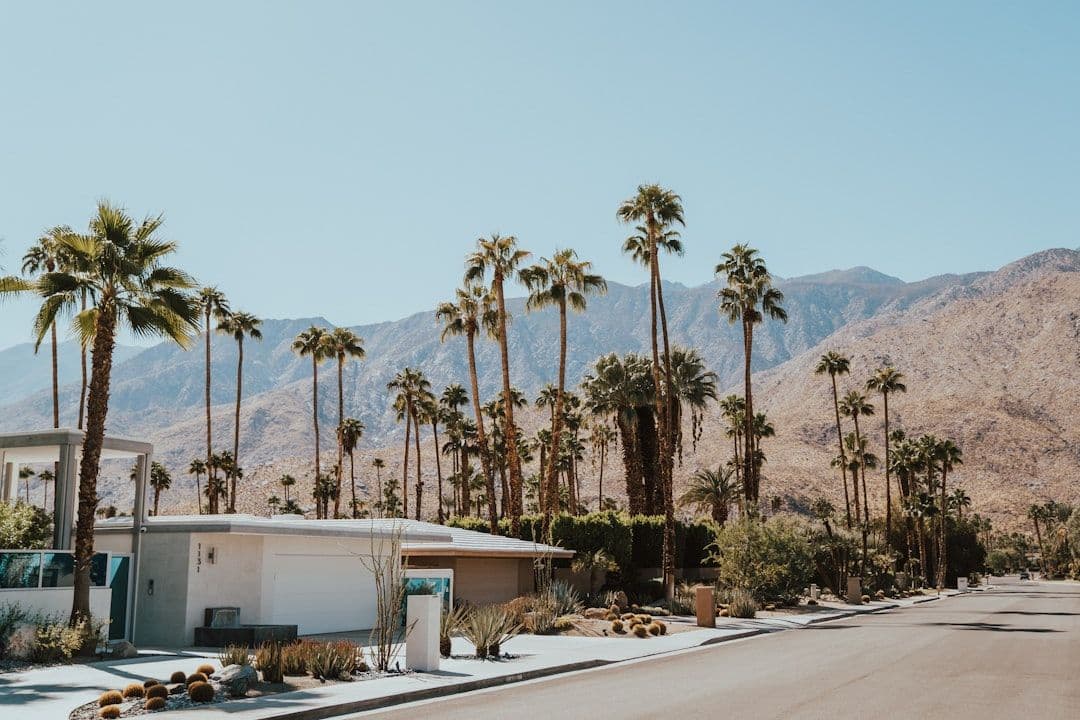
A buyer flies into PSP in February, drives north on Palm Canyon with the windows down, sees a butterfly roof against a 10,000 foot wall of rock, and decides in about forty minutes that this is home. I have watched that exact sequence play out for thirty years. The ones who are still happy five years later are the people who asked three boring questions before they wrote the offer. This is a guide to those questions.
Palm Springs is the creative heart of the Coachella Valley, a resort city of roughly 45,000 people known for mid-century modern architecture, boutique hotels, a walkable downtown full of restaurants and galleries, world-class golf and wellness resorts, and quick access to Joshua Tree National Park. The published median price on this site is $685,000. That single number hides more variation than almost any other city in the valley.
What the Market Looks Like In Practice
Third-party estimates sit in a similar band. Zillow's mid-2026 figure for the typical Palm Springs home value was around $620,000, described as down slightly from a year earlier. A local brokerage summary of Desert Area MLS data put the median sale price near $656,000 in May 2026, with roughly 775 active listings citywide, an average sale-to-list ratio near 97 percent, and median days on market around 67. Read those together and you get a picture rather than a prophecy: real selection for buyers, and sellers who price ambitiously sitting while the well-priced house down the street closes. I am not going to tell you where prices go next. Nobody honest will.
The Checkerboard Nobody Warns You About
Here is the first boring question: is it fee land or lease land? The federal government deeded the Agua Caliente Band of Cahuilla Indians roughly 52,000 acres across the valley, about 6,700 acres of which sit inside Palm Springs, laid out in an alternating one square mile pattern. Since 1959 tribal members have been able to lease those parcels on terms as long as 99 years, and local sources put the count of residential properties on Indian lease land in the area above 23,000. Lease land is not a defect. Some of the most desirable addresses in town sit on it, and pricing generally reflects it. What matters is the remaining term, the annual or monthly lease payment, how your lender treats it, and who your resale buyer pool will be in ten years. Ask before you tour, not after you are in escrow.
Neighborhood by Neighborhood
The five neighborhoods featured on this site are a fair map of how the city actually trades. Old Las Palmas is the old-money pocket north of downtown, walled properties, mature citrus and olive trees, a mix of Spanish, ranch, and modernist homes on generous lots. Vista Las Palmas is the postcard neighborhood, the Alexander built tract tucked against the base of the San Jacinto range where restored post and beam homes sell on architecture as much as square footage. Movie Colony is the walkability play, small blocks close to downtown where you can leave the car parked for a weekend. Twin Palms, on the south side, is the classic entry point into documented mid-century tract housing. Deepwell Estates trades on lot size and quiet streets, and it draws buyers who want a bigger footprint without the fishbowl feel of the tourist corridor. You can see what is currently listed across [Palm Springs](/cities/palm-springs) and compare those pockets side by side.
Price Tiers and Who Lands In Each
At the bottom of the market are condos, many of them in 1960s to 1980s complexes with HOA dues that cover roof, water, and grounds, and some of them on lease land. Redfin's downtown neighborhood data, which is heavily weighted toward attached homes, has run far below the citywide median for exactly that reason. The middle tier is the single family tract house, often a 1950s or 1960s three bedroom that has been remodeled once or twice, and this is where most relocating buyers actually land. Above that sits the architecture-driven and estate tier, where provenance, view corridor, privacy, and the quality of the last renovation drive value more than price per square foot does. Buyers in that top band are frequently second-home owners from Los Angeles, Orange County, the Bay Area, and increasingly from out of state, arriving on an airport that keeps adding service. United announced new daily year-round nonstops between PSP and LAX in January 2026, and Southwest ran seasonal weekend Austin flights from March 5 to April 6, 2026, joining Delta on the same route.
What People Get Wrong When They Move In
Four things, over and over. First, they assume a short-term rental permit comes with the house. Palm Springs treats vacation rentals as a regulated privilege, with neighborhood density limits, an annual contract cap, and registration fees reported around $1,072 for a whole-home rental, and the City Council adopted further amendments to the vacation rental chapter of the municipal code on July 8, 2026. Verify current rules and permit status with the city directly before you build a budget around rental income.
Second, they assume every older house is an architect-designed original. Documented provenance is a real value driver here, and a stucco box with new windows is not the same asset as a verified Alexander home, even on the same street. Third, they underestimate operating cost. Cooling a glass-walled house through a desert summer, running a pool, and keeping desert landscaping alive is a line item, not a rounding error, and it is worth asking a seller for twelve months of utility history. Fourth, they treat all views as equal. In my experience buyers pay a premium for the mountain wall in Vista Las Palmas without noticing that proximity to it changes light and afternoon shade in ways you only feel after you live there.
The Local Takeaway
Palm Springs rewards specificity. The city is small enough that the difference between two houses eight blocks apart can be a different land status, a different permit reality, and a different buyer pool at resale. Sellers should know which of those three stories their house tells before pricing it, because in a market with real inventory the listing that explains itself clearly is the one that gets the showing. Buyers should build their short list around land status and use restrictions first and architecture second, which is exactly the opposite of how most people shop here. And if you are timing a visit to learn the architecture rather than just admire it, Modernism Week runs a fall edition, scheduled for October 15 to 18, 2026, ahead of the big February festival.
If you want a candid read on a specific street, a specific lease, or what your current Palm Springs home would look like to today's buyer pool, reach out to Wendell Turner and let's talk it through.
About the author
Wendell Turner
30-year California broker · DRE License #01226922 · Coachella Valley specialist
Wendell Turner is a 30-year California real estate broker at Absolute Advantage Realty, specializing in the Coachella Valley, Pass Area, Inland Empire, and Southern California mountain regions. Known for a service-first approach, he has helped hundreds of buyers and sellers navigate Southern California real estate.