Cathedral City, Block by Block: A Broker's Buyer and Seller Guide
A 30 year broker's read on Cathedral City: how the Cove, the Dream Homes grid, and Desert Princess trade differently, what the price tiers really look like around the $475,000 median, and the four things relocating buyers get wrong.
Most people experience Cathedral City at 50 miles an hour. You come out of Palm Springs on Highway 111, you pass the casino at Date Palm Drive, mountains on your right and taco shops and car washes on your left, and a few minutes later you are in Rancho Mirage looking at gated entries. That drive-through impression is why Cathedral City is one of the most misread cities in the valley, and why the buyers who actually slow down and park usually find more house for the money than they expected.
The Map Is the Whole Argument
Cathedral City sits directly between Palm Springs and Rancho Mirage, which means a resident can be at a Palm Springs restaurant, a Rancho Mirage medical office, or the El Paseo shops in Palm Desert without paying the price per square foot of any of them. Population runs around 55,000, large enough for real grocery and service infrastructure and small enough that people recognize each other at the hardware store. Freeway access runs up Date Palm Drive and Ramon Road to Interstate 10, which matters if anyone in your household still drives to the Inland Empire or the Pass Area for work. In my experience that drive is the quiet reason many hybrid workers land here instead of farther down valley.
The city has also been putting money where its mouth is. The 2025 State of the City address centered on Measure W, which passed with 74 percent voter approval and funds annexation into the Desert Recreation District, neighborhood street repairs, a fourth ambulance, and a feasibility study for a future recreation center. The downtown Arts and Entertainment District now has real anchors: the renovated Mary Pickford Theatre, the CVRep performing arts theater, and the community amphitheater that has become the venue for the city's event calendar. The city also awarded $90,000 in community and arts grants for fiscal year 2026/2027. None of that guarantees anything about your property value, but a funded downtown with a stage in it is not nothing.
The Neighborhoods Do Not Trade Alike
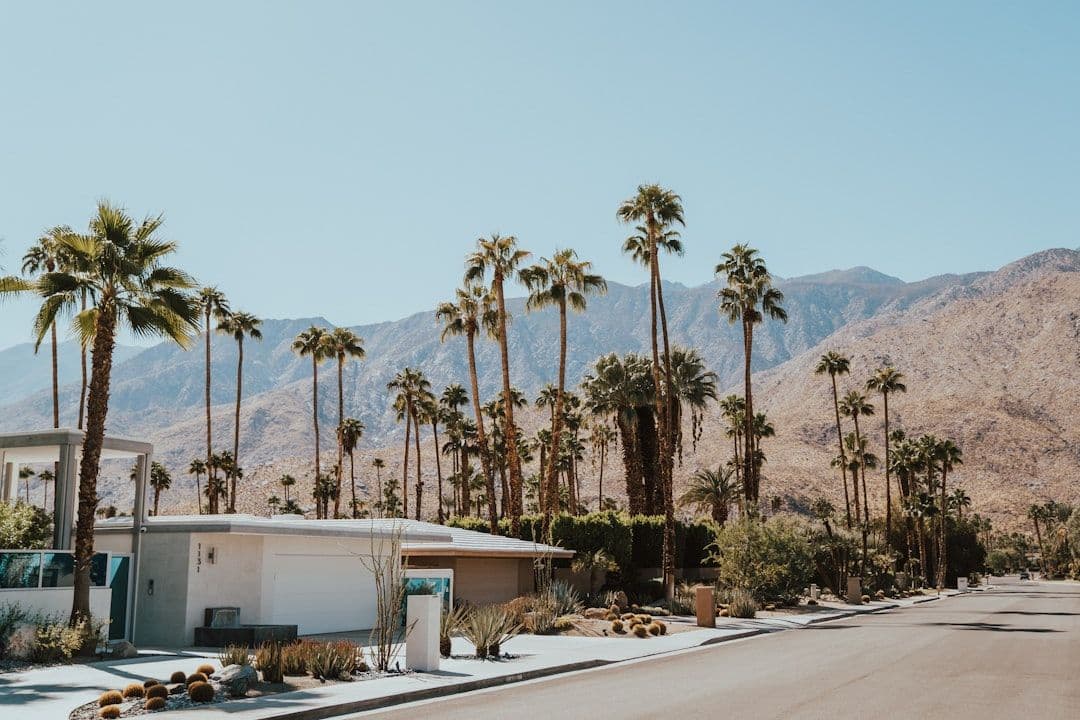
Cathedral City Cove is the piece most relocating buyers fall for once they see it. It climbs into the Santa Rosa foothills on the south side, the streets are quiet, lots are often larger than the valley average, and the mountain wall behind you changes color twice a day. It is also where you find the widest spread between an untouched 1970s tract house and a fully reimagined one with a pool, so two homes on the same block can be far apart in price for reasons that are entirely about condition.
North of the highway you get the flatter, grid-built neighborhoods around Dream Homes, Rio Vista, and the Landau and Vista Chino corridor. This is the heart of the entry-level market, the place where first-time buyers and valley workers actually buy, and where investors look for long-term rentals. Prices are lower, lot sizes are modest, and the housing stock runs heavily to single-story three-bedroom homes from the 1960s through the 1990s.
Then there are the planned communities. Desert Princess, the golf community on the Palm Springs side of town, is the best-known example on this site and functions almost like its own small city, with condos, attached homes, and a resort hotel on the property. Cathedral Canyon Country Club offers a similar idea at a different price point. Buy inside any of these and you are buying an HOA budget and a rulebook as much as a floor plan, so read the documents during your contingency period, not after.
Price Tiers and What the Numbers Are Saying
Our site publishes a median price of $475,000 for Cathedral City, and that figure fairly describes the broad middle of this market. Third-party trackers land nearby with different windows: one recent city guide showed a trailing twelve-month median sale price near $534,000 with homes averaging about 63 days on market, while a thirty-day snapshot from another source showed a median around $609,000 on a sample of only four closed sales. That gap is the lesson. Cathedral City is a wide market, and a short-window median built on a handful of sales tells you almost nothing about your street.
Practically, the tiers look like this. Condos and attached homes in the golf communities occupy the lowest rung and are where many part-time owners start. Standard north-of-the-highway single-family homes cluster in the middle. Cove homes with views, pools, and genuine renovation sit at the top, and a custom build on a large Cove lot can trade well above anything the city median would suggest.
What Relocating Buyers Get Wrong
Four things, consistently. First, they assume the whole city is one market, then they are surprised when a Cove listing and a Dream Homes listing priced $200,000 apart both look reasonable. Second, they skip the land question. Portions of the Coachella Valley sit on Agua Caliente land, and fee versus leased land changes your monthly cost and your lender's appetite, so confirm the status of the specific parcel in writing.
Third, they treat short-term rental income as a given. Vacation rental rules are set city by city in this valley, and Cathedral City has its own ordinance and permit process, so verify the current rules with the city for the exact address before you build a spreadsheet around them. Fourth, they shop by city reputation instead of by block. Cathedral City has streets that feel like Palm Springs and streets that feel like a working neighborhood, sometimes within a half mile of each other. Drive your short list at 7 a.m. and again at 9 p.m.
If You Are Selling Here
Days on market in the low 60s tells you this is not a market that rewards an aspirational list price. Buyers in this price range are payment-sensitive and they are comparing you to Palm Springs and Desert Hot Springs on the same screen. The sellers who do well here usually do three unglamorous things: they price against genuinely comparable homes in their own pocket of the city rather than the citywide average, they handle the deferred items a buyer's inspector will find anyway (roof, evaporative coolers, pool equipment, irrigation), and they photograph the mountain view if they have one, because that view is a large part of what people are buying.
The Local Takeaway
Cathedral City is not a compromise between its famous neighbors. It is a central address with a downtown that is actively being built, an entry-level market that still exists in a valley where that is getting rare, and enough variety between neighborhoods that your research has to happen at the block level. If you want to see what is currently on the market, you can browse listings in [Cathedral City](/cities/cathedral-city) and get a feel for the spread yourself.
If you are weighing a move here, or you own a home in the Cove or near downtown and want an honest read on what it would take to sell it well, reach out and we can talk it through. Thirty years in this valley has taught me the right answer is usually specific to the street, not the city.
About the author
Wendell Turner
30-year California broker · DRE License #01226922 · Coachella Valley specialist
Wendell Turner is a 30-year California real estate broker at Absolute Advantage Realty, specializing in the Coachella Valley, Pass Area, Inland Empire, and Southern California mountain regions. Known for a service-first approach, he has helped hundreds of buyers and sellers navigate Southern California real estate.